Discover whether acoustic panels, sound masking or both are best for your office. Improve speech privacy, reduce noise & create a more productive workspace.

Office noise is one of the biggest hidden barriers to productivity in modern workplaces. HR teams hear it in employee surveys, and you see it firsthand when colleagues retire to a meeting room just to concentrate. Yet many organisations still treat acoustics as an afterthought. Something that only becomes visible when staff start complaining.
The good news? Office noise reduction doesn’t always require a full refurbishment. With the right strategy, a blend of smart design choices and quick win noise reduction “hacks” can transform the acoustic experience of a space and help reduce office noise. As an acoustician, Colin Rawlings has helped dramatically improve hundreds of workplaces by approaching noise with both science and practicality. Here, Colin explains where to start.
Before investing in fixes, it’s important to identify what’s actually driving disruption. Typically, workplace acoustics are affected by:
1. People noise: Conversations, phone calls, laughter and impromptu huddles. In open plan spaces, this is usually the number one complaint.
2. Building noise: HVAC hum, poorly insulated risers, lift motors and echo caused by hard surfaces.
3. Technology noise: Keyboards, printers, meeting room alerts and equipment fans. Individually small, collectively distracting.
A quick acoustic audit, informal or professional, helps prioritise what will deliver the biggest impact. Particularly around how sound behaves in open spaces.
If you need improvements fast, or want to demonstrate progress before a larger fitout, these tactics can make an immediate difference:
1. Create “Quiet Corridors”: Place focus work desks away from high traffic walkways. Even a small relocation can dramatically reduce disturbance.
2. Add soft furnishings: Upholstered seating, curtains and padded meeting booths absorb sound far more effectively than exposed timber or glass.
3. Introduce behaviour cues: Simple signage, such as “This is a Focus Zone” or “Please use headphones for calls”, can help set expectations without feeling authoritarian.
4. Provide high quality headsets: A low cost, high impact way to make hybrid meetings and phone calls less disruptive for everyone around.
These office noise reduction hacks aren’t substitutes for long term investment, but they can meaningfully improve day-to-day experience.

If your organisation is planning a refurbishment or reshaping its workplace strategy, integrating professional acoustic design will deliver far more robust, sustainable results.
Absorptive treatments reduce reverberation, making the space feel calmer and conversation less intrusive. Ceiling Absorbers like baffles or blades are especially powerful in large open plan floors.
Group loud functions (collaboration spaces, social areas) together, and locate quiet functions (focus work, HR, finance) in acoustically protected pockets. Strategic zoning is one of the most effective long-term ways to reduce office noise.
Poorly specified partitions leak sound easily. A well designed meeting room should stop confidential conversations escaping and prevent surrounding noise entering. This is a core element of managing acoustics in office spaces properly.
Carpet, and high performance ceiling tiles all significantly improve sound absorption and stop sound reflecting.
Often misunderstood, sound masking doesn’t make rooms noisier. It introduces a gentle ambient sound, engineered to make speech less intelligible and therefore less distracting.
Poor acoustics are more than an annoyance. They affect recruitment, retention and wellbeing, and as highlighted in in research from Cardiff University and ICBEN, lack of privacy and increased noise are common complaints in open plan offices. The same study also shows that noise exposure can diminish wellbeing and impair performance, often leading employees to adopt coping strategies such as moving away from their desks or using headphones to manage distractions.
Investing in office acoustics isn’t a “nice to have” but a direct contributor to productivity and employee experience.
If you’d like help assessing your existing office or planning a new layout, the team at Acoustics by Design specialises in practical, evidence led solutions that create workplaces people genuinely enjoy being in.

Colin Rawlings, MIoA – MD of Acoustics by Design
A qualified acoustician with over two decades of experience, Colin specialises in workplace acoustic solutions across the UK and Europe, delivering consultancy, CPDs, and seminars, making complex acoustic challenges simple for architects, designers, and businesses.
Background chatter, ringing phones, and echoing meeting rooms don’t just irritate your team, they disrupt concentration, increase stress, and compromise speech privacy. A noise assessment helps you pinpoint these barriers to productivity and create a comfortable workspace.
Whether you manage an open-plan office, a university campus, or a corporate headquarters, understanding office acoustics is essential. This guide explains what noise assessments are, why your workplace needs one, and how following industry guidelines can transform your operations.
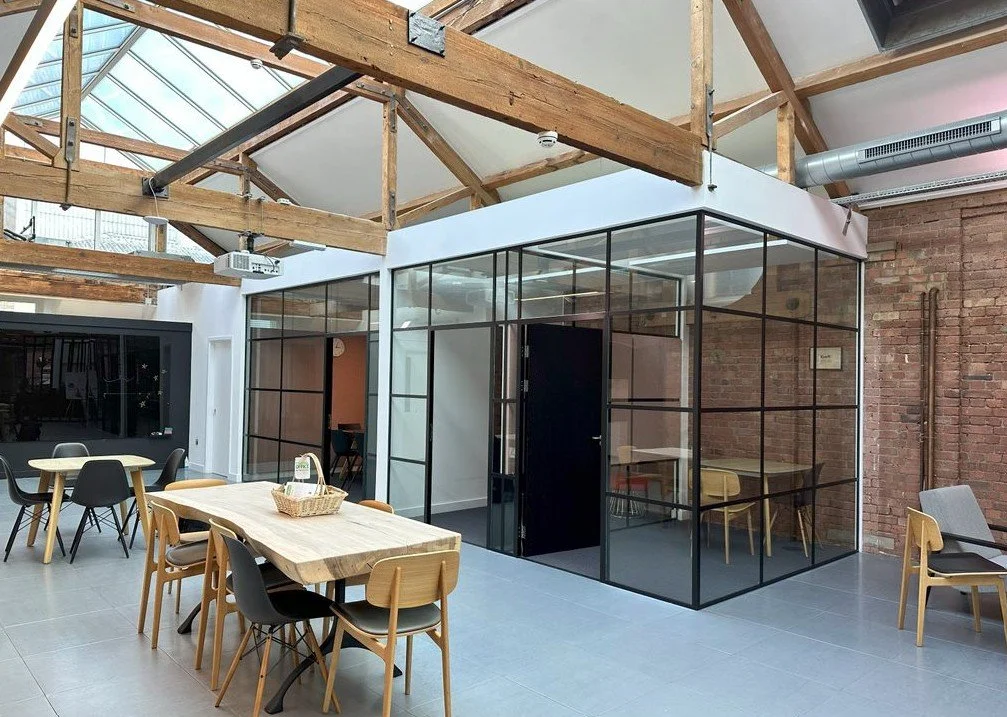
A noise assessment is a systematic evaluation of sound levels and acoustic performance within your workplace, delivered by qualified acousticians. Acoustics by Design specialise in commercial interiors, offices, meeting rooms, and open-plan workspaces, offering expert consultancy that diagnoses and resolves noise and speech-related issues.
Core services:
Speech privacy in meeting rooms: Measurement and solution design to keep conversations confidential.
Comfort and concentration in open plan: Analysis and tailored recommendations like ceiling and wall treatments, desk-mounted screens, or zoned absorption.
Reverberation control: Pinpointing and addressing echo and speech clarity issues with acoustic panels or baffles.
Comprehensive reporting: Benchmarking your space against British standards, with clear, actionable recommendations.
Typical assessments involve measuring background sound, evaluating reverberation, analysing speech privacy, and reviewing comfort, all compared to accepted industry guidelines.
Productivity & focus:
Workplace noise hampers concentration and disrupts communication. Identifying and addressing acoustic issues through a noise assessment can boost team performance and satisfaction.
Employee wellbeing:
While office noise rarely causes hearing damage, prolonged exposure to poor acoustics leads to stress and fatigue. Assessments help you create a calmer, more supportive workspace.
Speech privacy:
In HR, executive offices, and meeting rooms, confidentiality is crucial. Assessments highlight problem areas and facilitate effective, targeted improvements.
If your staff rely on focus and communication, a noise assessment is valuable:
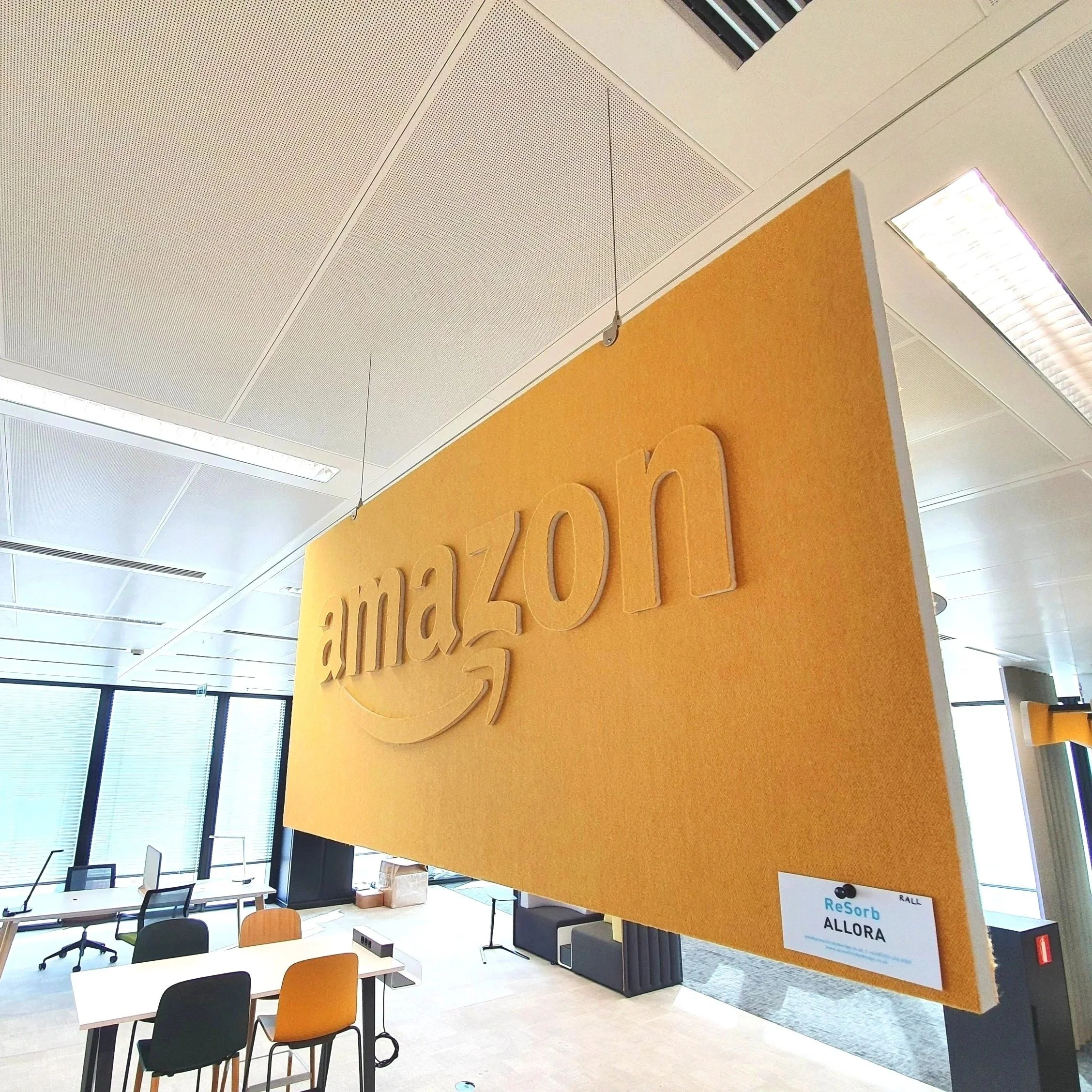
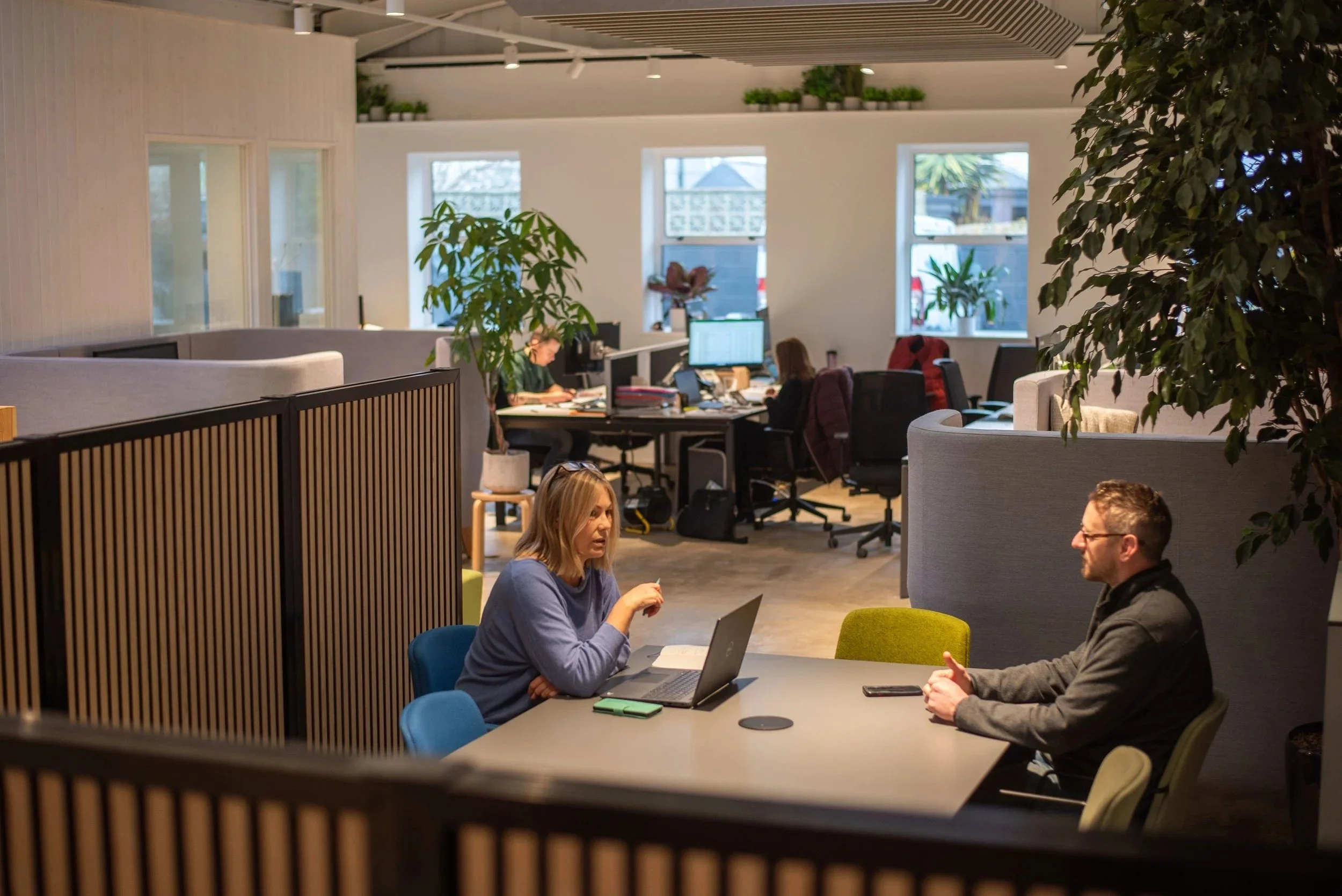
Open-plan offices: Chatter and noise spill disrupt concentration; assessments guide treatment selection. Take a look at our Resorb install project in a London office.
Universities/colleges: Acoustic challenges like reverberation and communal noise are addressed to support both study and teaching. Check out our sound absorption project at the University of East London.
Corporate HQs: Hard surfaces often increase echo; expert assessment supports effective design intervention.
Industrial environments must observe strict noise control legislation to prevent hearing loss. Offices, however, have no legally enforced decibel limit for comfort. Instead, industry guidelines set the benchmark. At Acoustics by Design, we measure your space against these standards, not legislation ensuring spaces are pleasant and productive.
For offices, the British Council for Offices recommends:
Open-plan: 45–50 dB for focused work
Meeting rooms: 35–40 dB for clear communication
Executive offices: 35–40 dB for privacy and focus
While these are much lower than industrial thresholds, they’re vital for a productive workplace whether that’s in office or University library. Our evaluation will suggest the best solutions to achieve these targets.
Initial consultation: We discuss your concerns, team activities, building layout, and any previous complaints.
Comprehensive site survey: Our acousticians visit and measure sound levels using calibrated equipment; we test reverberation, background noise, and sound insulation.
Data analysis: We compare findings to best practice and industry guidelines to reveal how your environment matches optimal acoustic standards.
Detailed reporting: You receive a clear report with tailored recommendations, such as acoustic panels, layout changes, or introducing sound-absorbing furnishings.
Take Action on Workplace Noise
Looking to improve comfort and productivity in your office? Acoustics by Design offers comprehensive noise assessments by fully qualified acousticians, delivering practical, effective solutions tailored to your needs. Go to our consultation page to find out more.
Contact us for a complimentary consultation and discover how your workspace can meet industry guidelines to become healthier, more focused, and more productive
A qualified acoustician with over two decades of experience, Colin specialises in workplace acoustic solutions across the UK and Europe, delivering consultancy, CPDs, and seminars, making complex acoustic challenges simple for architects, designers, and businesses.
Office noise is one of the biggest hidden barriers to productivity in modern workplaces. HR teams hear it in employee surveys, and you see it firsthand when colleagues retire to a meeting room just to concentrate. Yet many organisations still treat acoustics as an afterthought. Something that only becomes visible when staff start complaining.
The good news? Office noise reduction doesn’t always require a full refurbishment. With the right strategy, a blend of smart design choices and quick win noise reduction “hacks” can transform the acoustic experience of a space and help reduce office noise. As an acoustician, Colin Rawlings has helped dramatically improve hundreds of workplaces by approaching noise with both science and practicality. Here, Colin explains where to start.
Before investing in fixes, it’s important to identify what’s actually driving disruption. Typically, workplace acoustics are affected by:
1. People noise: Conversations, phone calls, laughter and impromptu huddles. In open plan spaces, this is usually the number one complaint.
2. Building noise: HVAC hum, poorly insulated risers, lift motors and echo caused by hard surfaces.
3. Technology noise: Keyboards, printers, meeting room alerts and equipment fans. Individually small, collectively distracting.
A quick acoustic audit, informal or professional, helps prioritise what will deliver the biggest impact. Particularly around how sound behaves in open spaces.
If you need improvements fast, or want to demonstrate progress before a larger fitout, these tactics can make an immediate difference:
1. Create “Quiet Corridors”: Place focus work desks away from high traffic walkways. Even a small relocation can dramatically reduce disturbance.
2. Add soft furnishings: Upholstered seating, curtains and padded meeting booths absorb sound far more effectively than exposed timber or glass.
3. Introduce behaviour cues: Simple signage, such as “This is a Focus Zone” or “Please use headphones for calls”, can help set expectations without feeling authoritarian.
4. Provide high quality headsets: A low cost, high impact way to make hybrid meetings and phone calls less disruptive for everyone around.
These office noise reduction hacks aren’t substitutes for long term investment, but they can meaningfully improve day-to-day experience.
If your organisation is planning a refurbishment or reshaping its workplace strategy, integrating professional acoustic design will deliver far more robust, sustainable results.
Absorptive treatments reduce reverberation, making the space feel calmer and conversation less intrusive. Ceiling Absorbers like baffles or blades are especially powerful in large open plan floors.
Group loud functions (collaboration spaces, social areas) together, and locate quiet functions (focus work, HR, finance) in acoustically protected pockets. Strategic zoning is one of the most effective long-term ways to reduce office noise.
Poorly specified partitions leak sound easily. A well designed meeting room should stop confidential conversations escaping and prevent surrounding noise entering. This is a core element of managing acoustics in office spaces properly.
Carpet, and high performance ceiling tiles all significantly improve sound absorption and stop sound reflecting.
Often misunderstood, sound masking doesn’t make rooms noisier. It introduces a gentle ambient sound, engineered to make speech less intelligible and therefore less distracting.
Poor acoustics are more than an annoyance. They affect recruitment, retention and wellbeing, and as highlighted in in research from Cardiff University and ICBEN, lack of privacy and increased noise are common complaints in open plan offices. The same study also shows that noise exposure can diminish wellbeing and impair performance, often leading employees to adopt coping strategies such as moving away from their desks or using headphones to manage distractions.
Investing in office acoustics isn’t a “nice to have” but a direct contributor to productivity and employee experience.
If you’d like help assessing your existing office or planning a new layout, the team at Acoustics by Design specialises in practical, evidence led solutions that create workplaces people genuinely enjoy being in.
Colin Rawlings, MIoA – MD of Acoustics by Design
A qualified acoustician with over two decades of experience, Colin specialises in workplace acoustic solutions across the UK and Europe, delivering consultancy, CPDs, and seminars, making complex acoustic challenges simple for architects, designers, and businesses.
Open plan and hybrid workplaces are brilliant for collaboration, yet many suffer from conversational distraction and poor speech privacy.
In our ABC approach to interior acoustics, Cover sits alongside Absorption and Blocking to create balanced, comfortable spaces.
Sound masking is the Cover element that raises a controlled, speech‑shaped background so chatter fades, and teams can focus. It directly addresses two of the most common workplace frustrations, noise and privacy, which are strongly linked to perceived productivity in open offices.
Sound masking introduces a subtle, engineered sound through discreet loudspeakers to reduce the intelligibility of speech and soften everyday distractions. It is not untuned “white noise”.
The spectrum is carefully shaped to match human speech, which makes it more effective and less noticeable during the working day.
As a result, conversations become less intrusive beyond immediate desk neighbours, helping staff concentrate without changing the visual design of the space.
In open offices, performance is often assessed using parameters such as spatial decay of speech and distraction distance, measured according to ISO 3382‑3.
By gently lifting the ambient background and tuning the spectrum to speech, sound masking reduces the distance at which conversation remains intelligible, improving concentration comfort for nearby teams.
Commissioning aligns with guidance that sets appropriate output ranges for open work areas and enclosed rooms, ensuring the result is effective and unobtrusive.
Better focus. Reducing the audibility of nearby conversation decreases distraction and makes it easier to sustain attention on complex tasks.
Reliable speech privacy. HR, finance and client‑facing areas benefit from greater confidentiality in open spaces and meeting rooms, particularly during busy periods.
Standards‑aligned outcomes. Sound masking complements user‑centred planning in ISO 22955:2021 and works hand in hand with measurement per ISO 3382‑3:2022, supporting WELL’s building standards acoustic goals when correctly commissioned.
Practical retrofit. It integrates with ceiling and wall absorption, desk screens and etiquette, and is often simpler to deploy where architectural changes are constrained.
Sound masking complements user‑centred planning in ISO 22955:2021, which frames acoustic quality targets for different open‑plan activities, and it works hand in hand with measurement per ISO 3382‑3:2022.
Where projects pursue certification, WELL building standards sets clear commissioning criteria for output and verification. While typical offices sit below the action values in UK Noise at Work regulations, annoyance and privacy remain design challenges that acoustic solutions should address.
Sound masking is effective across open floors, enclosed rooms, receptions and circulation zones. We provide an end‑to‑end service: survey and analysis, design, installation, calibration and aftercare, integrating masking with ceiling and wall absorption and appropriate screens for a complete ABC solution. To experience tuned sound masking in your space, get in touch today.
Colin Rawlings, MIoA – MD of Acoustics by Design
A qualified acoustician with over two decades of experience, Colin specialises in workplace acoustic solutions across the UK and Europe, delivering consultancy, CPDs, and seminars, making complex acoustic challenges simple for architects, designers, and businesses.
Acoustics are often overlooked during office fit-outs, yet poor sound control can lead to noise distractions, reduced productivity, and employee dissatisfaction. A well-designed acoustic environment supports focus, collaboration, and comfort. Unfortunately, many projects make the same errors that compromise workplace performance, as Colin Rawlings of MIoA explains.
Here are the five most common acoustic mistakes in office fit-outs and practical solutions to address them.
Open-plan layouts encourage collaboration but also create significant acoustic challenges. Without proper planning, conversations and background noise can quickly become overwhelming, making it hard for employees to concentrate. This issue is one of the most frequent complaints in modern workplaces.
Solution: Integrate acoustic panels, ceiling baffles, and sound-absorbing screens. Zoning areas for quiet work and collaborative tasks helps maintain speech privacy and reduce distractions. Acoustic design for office fit-outs should always include noise control strategies tailored to open-plan environments.
Reverberation occurs when sound reflects off hard surfaces, creating echoes that make speech difficult to understand. Large spaces with high ceilings and minimal soft furnishings are particularly prone to this issue, which can lead to fatigue and poor communication.
Solution: Install acoustic wall panels, suspended ceiling treatments, and soft furnishings to absorb sound. Professional reverberation control consultancy ensures the right balance for speech clarity and comfort, preventing the need for costly retrofits later.
Glass partitions, concrete floors, and exposed ceilings may look stylish, but they amplify sound rather than absorb it. This can create a harsh acoustic environment that affects productivity and well-being.
Solution: Choose finishes with acoustic properties. Carpets, curtains, and acoustic panels can be integrated without compromising design aesthetics. Acoustic consultancy for interior designers ensures material choices support both visual appeal and acoustic performance.
Meeting rooms and phone booths often lack adequate sound isolation, resulting in confidential conversations being overheard. This not only affects privacy but also creates distractions for others nearby.
Solution: Fit acoustic seals on doors, use partitions, take particular care at the junctions of windows and pillars, and plan for acoustic insulation during the design stage. Speech privacy in offices is essential for compliance and comfort, and early planning avoids expensive fixes down the line.
Many office fit-outs focus on visual appeal and functionality, leaving acoustics as an afterthought. This can lead to costly retrofits and ongoing complaints from staff.
Solution: Engage an acoustic consultant early in the design process. At Acoustics By Design, we provide tailored solutions for office acoustic design, ensuring your workspace meets both aesthetic and performance goals.
Good acoustic design does more than reduce noise. It creates a workspace where people can focus, collaborate, and feel comfortable. Poor acoustics can lead to stress and reduced productivity, while a well-planned strategy enhances communication and well-being.
Ready to improve your office acoustics? Acoustics By Design offers expert consultancy for noise control, reverberation management, and bespoke solutions tailored to your project.
Colin Rawlings, MIoA – MD of Acoustics by Design
A qualified acoustician with over two decades of experience, Colin specialises in workplace acoustic solutions across the UK and Europe, delivering consultancy, CPDs, and seminars, making complex acoustic challenges simple for architects, designers, and businesses.
Open-plan layouts, shared spaces, and hybrid working models have become standard, encouraging collaboration and flexibility. However, these changes also bring new acoustic challenges. Conversations travel across rooms, confidential discussions can be overheard, and distractions are harder to manage.
This is where sound masking comes in. By introducing a subtle, engineered background sound, sound masking reduces the intelligibility of speech and creates a more comfortable acoustic environment. It doesn’t block noise completely, but it makes conversations less distracting and improves privacy.
So, which workplaces benefit most from this solution? Let’s explore the sectors and environments where sound masking makes the biggest impact.
Open-plan offices are designed to foster teamwork and communication, but they often suffer from excessive noise and lack of privacy. Conversations, phone calls, and even keyboard clicks can disrupt concentration.
Sound masking helps by reducing the clarity of speech, making background conversations less distracting. Employees can focus better, and sensitive discussions remain private.
Key benefits:
Improves productivity by reducing interruptions.
Creates a more comfortable environment for hybrid teams.
Supports confidential conversations without the need for physical barriers.
Example: A marketing agency with a collaborative workspace can use sound masking to ensure creative discussions don’t disturb those working on detailed reports.
In healthcare environments, confidentiality is critical. Patients expect their personal information to remain private during consultations, and regulations demand compliance with strict privacy standards.
Sound masking supports these goals by preventing conversations from being overheard in waiting areas, corridors, and treatment rooms. It also helps create a calmer atmosphere for patients and staff, reducing stress in busy clinical settings.
Key benefits:
Protects patient confidentiality in line with GDPR and NHS guidelines.
Reduces anxiety for patients in noisy environments.
Improves staff focus in high-pressure situations.
Example: A GP surgery can use sound masking in reception areas to ensure patient details aren’t overheard by others waiting nearby.
Banks, law firms, and insurance companies handle highly sensitive information daily. A single overheard conversation could compromise client trust or regulatory compliance.
Sound masking ensures speech privacy in meeting rooms, open offices, and reception areas. It’s a simple yet effective way to protect confidentiality and maintain a professional environment.
Key benefits:
Safeguards client data and sensitive discussions.
Helps meet compliance requirements for privacy.
Creates a more professional and secure atmosphere.
Example: A law firm with glass-walled meeting rooms can use sound masking to prevent conversations from being audible in adjacent spaces.
Call centres are among the noisiest workplaces, with dozens or even hundreds of agents speaking simultaneously. This can lead to distractions, reduced productivity, and poor customer experiences.
By introducing sound masking, organisations can lower the impact of overlapping conversations. Agents concentrate better, and customers enjoy clearer, more professional interactions.
Key benefits:
Reduces stress for employees in high-volume environments.
Improves call quality and customer satisfaction.
Supports compliance with data protection standards.
Example: A large customer support hub can use sound masking to create zones where agents can focus without being distracted by neighbouring calls.
Universities, schools, and corporate training rooms often feature open learning areas where noise can quickly become a problem.
Sound masking helps maintain focus during lectures, exams, and group work by reducing distractions. It’s particularly useful in libraries and study zones where quiet is essential.
Key benefits:
Enhances concentration for students and trainees.
Creates a more productive learning environment.
Reduces stress during exams and assessments.
Example: A university library can use sound masking to maintain a consistent level of quiet without relying on complete silence, which can feel uncomfortable.
Public sector environments frequently involve confidential discussions, whether in council offices or administrative hubs.
Sound masking provides an extra layer of security for speech privacy while improving overall comfort for staff and visitors.
Key benefits:
Protects sensitive information in compliance with regulations.
Improves productivity in busy administrative settings.
Creates a more professional and welcoming environment.
Example: A local council office can use sound masking in open-plan areas to ensure private conversations remain confidential.
Beyond privacy and noise reduction, sound masking offers several universal benefits:
Cost-effective: Less expensive than building physical barriers or installing complex soundproofing.
Flexible: Can be integrated into existing spaces without major disruption.
Scalable: Suitable for small offices or large multi-floor environments.
Across all these sectors, the benefits are clear: improved concentration, enhanced privacy, and a more pleasant working environment. As workplaces continue to adapt, acoustic solutions like sound masking are becoming essential for productivity and well-being.
Ready to improve your workplace acoustics?
Explore our tailored acoustics solutions and discover how we can help create a more focused, confidential, and comfortable environment.
To learn more, visit our Sound Masking page or contact us for a consultation.
Acoustics By Design were engaged to look at a number of acoustic issues across the Paramount Pictures offices in Holland.