
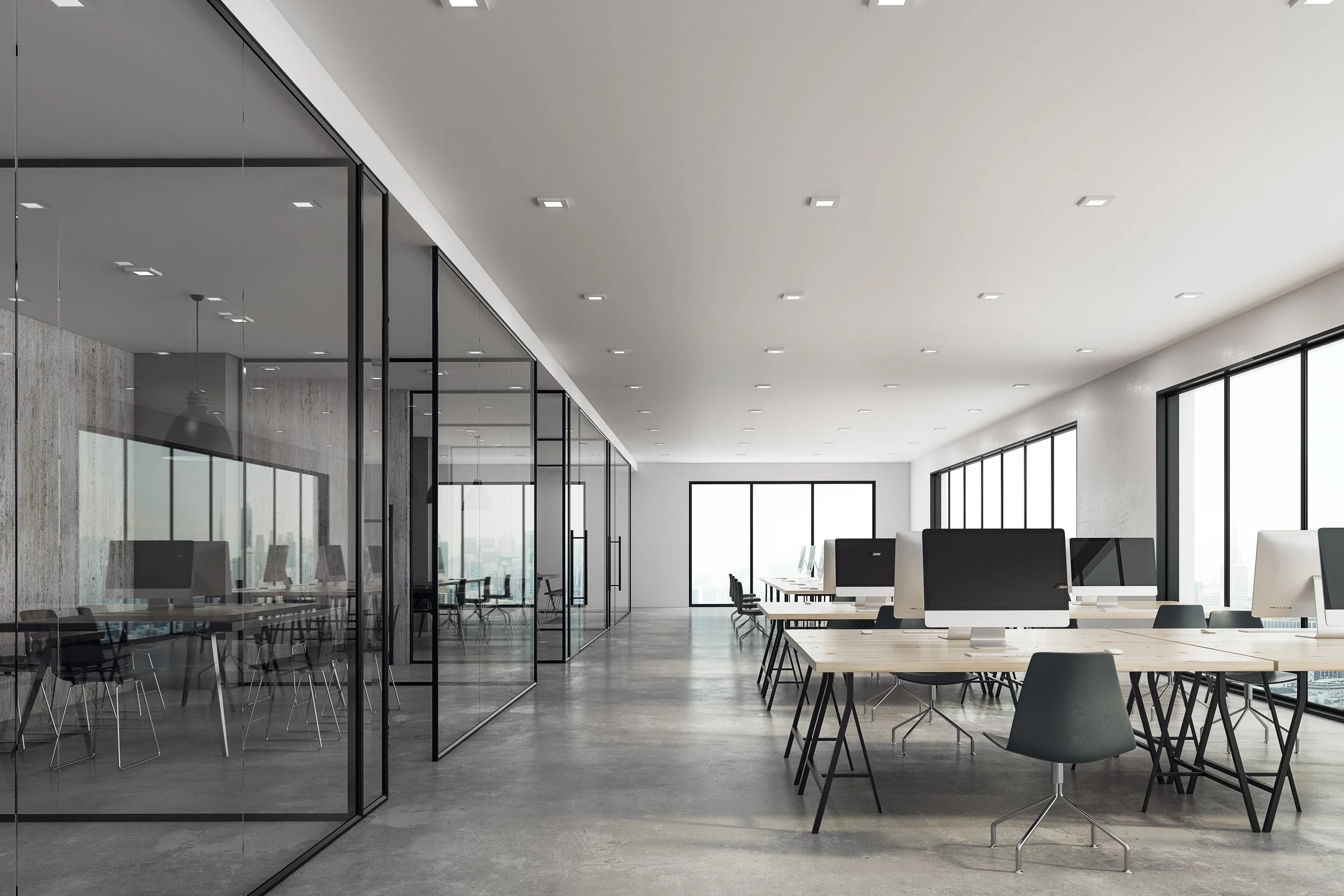
Open plan and hybrid workplaces are brilliant for collaboration, yet many suffer from conversational distraction and poor speech privacy.
In our ABC approach to interior acoustics, Cover sits alongside Absorption and Blocking to create balanced, comfortable spaces.
Sound masking is the Cover element that raises a controlled, speech‑shaped background so chatter fades, and teams can focus. It directly addresses two of the most common workplace frustrations, noise and privacy, which are strongly linked to perceived productivity in open offices.
What is sound masking?
Sound masking introduces a subtle, engineered sound through discreet loudspeakers to reduce the intelligibility of speech and soften everyday distractions. It is not untuned “white noise”.
The spectrum is carefully shaped to match human speech, which makes it more effective and less noticeable during the working day.
As a result, conversations become less intrusive beyond immediate desk neighbours, helping staff concentrate without changing the visual design of the space.
How does sound masking work in practice?
In open offices, performance is often assessed using parameters such as spatial decay of speech and distraction distance, measured according to ISO 3382‑3.
By gently lifting the ambient background and tuning the spectrum to speech, sound masking reduces the distance at which conversation remains intelligible, improving concentration comfort for nearby teams.
Commissioning aligns with guidance that sets appropriate output ranges for open work areas and enclosed rooms, ensuring the result is effective and unobtrusive.
The benefits of sound masking
Better focus. Reducing the audibility of nearby conversation decreases distraction and makes it easier to sustain attention on complex tasks.
Reliable speech privacy. HR, finance and client‑facing areas benefit from greater confidentiality in open spaces and meeting rooms, particularly during busy periods.
Standards‑aligned outcomes. Sound masking complements user‑centred planning in ISO 22955:2021 and works hand in hand with measurement per ISO 3382‑3:2022, supporting WELL’s building standards acoustic goals when correctly commissioned.
Practical retrofit. It integrates with ceiling and wall absorption, desk screens and etiquette, and is often simpler to deploy where architectural changes are constrained.
Standards and good practice
Sound masking complements user‑centred planning in ISO 22955:2021, which frames acoustic quality targets for different open‑plan activities, and it works hand in hand with measurement per ISO 3382‑3:2022.
Where projects pursue certification, WELL building standards sets clear commissioning criteria for output and verification. While typical offices sit below the action values in UK Noise at Work regulations, annoyance and privacy remain design challenges that acoustic solutions should address.
Where it fits and how we deliver
Sound masking is effective across open floors, enclosed rooms, receptions and circulation zones. We provide an end‑to‑end service: survey and analysis, design, installation, calibration and aftercare, integrating masking with ceiling and wall absorption and appropriate screens for a complete ABC solution. To experience tuned sound masking in your space, get in touch today.

About the author
Colin Rawlings, MIoA – MD of Acoustics by Design
A qualified acoustician with over two decades of experience, Colin specialises in workplace acoustic solutions across the UK and Europe, delivering consultancy, CPDs, and seminars, making complex acoustic challenges simple for architects, designers, and businesses.