
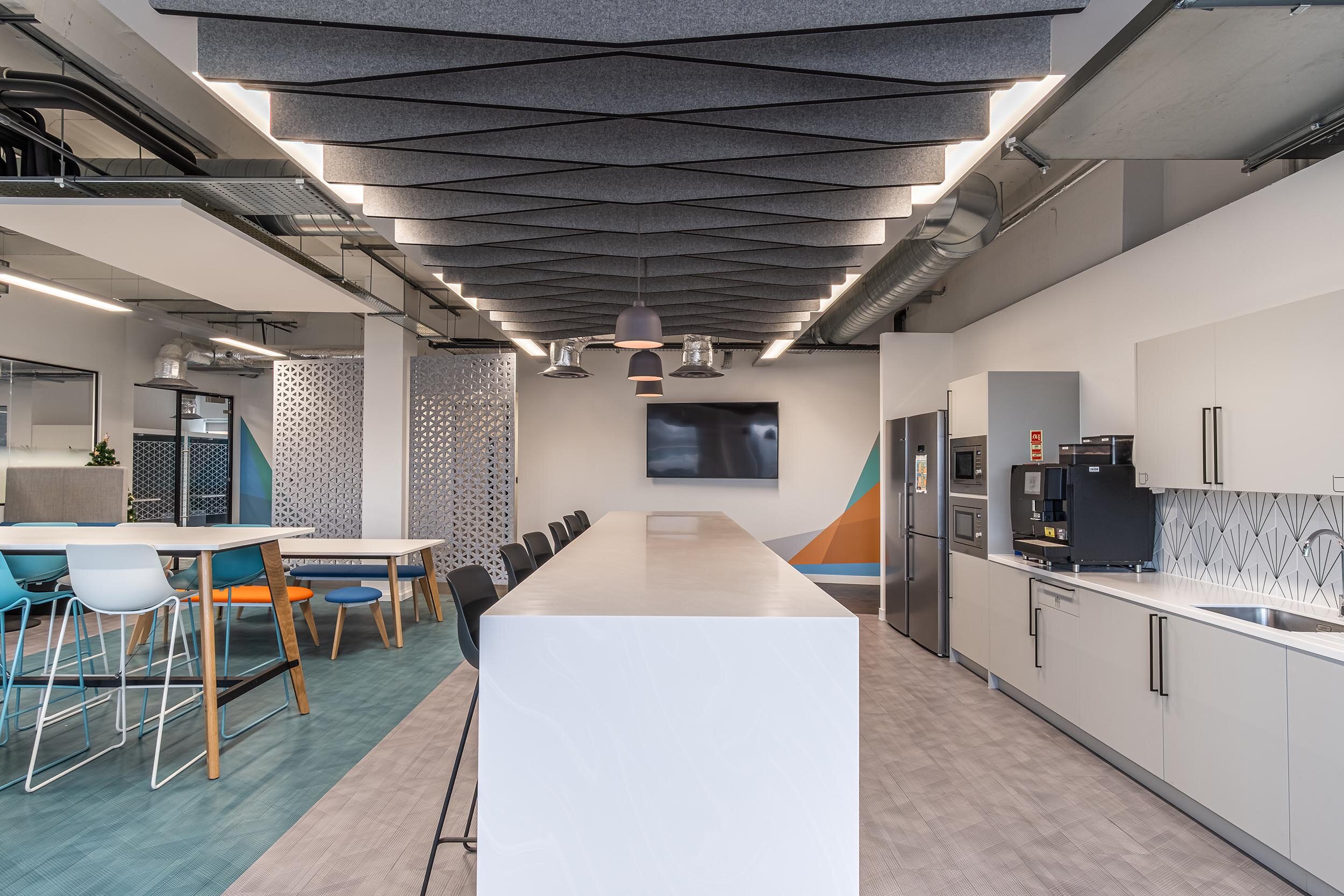
Modern workplaces need spaces that support both collaboration and concentration. As hybrid working becomes more common, office breakout areas have become an important feature of workplace design, giving employees somewhere to meet informally, relax, or share ideas away from their desks.
The challenge is ensuring these spaces encourage interaction without creating distractions for the wider office. With thoughtful planning and the right acoustic solutions, businesses can achieve both.
Understanding Office Breakout Areas
An office breakout area is an informal space designed for collaboration, social interaction, or short periods of respite from focused work. Unlike traditional meeting rooms, breakout areas offer a more relaxed setting that encourages creativity and spontaneous conversations.
They have become a key part of modern office layouts, helping organisations create more adaptable and employee-focused environments. For businesses embracing flexible workspaces, breakout spaces provide a valuable alternative to desks and formal meeting rooms while supporting wellbeing and productivity.
Challenges of Noise in Breakout Spaces
While breakout areas offer many benefits, they can also introduce unwanted noise. Conversations, video calls, foot traffic, and nearby kitchen facilities can all contribute to higher sound levels, particularly in open-plan offices.
When noise is not managed effectively, it can impact concentration, increase stress, and reduce productivity for employees working nearby. The goal is to create collaborative spaces that feel open and inviting while preventing sound from affecting focused work areas.
Designing Quiet Breakout Areas
Acoustic Treatments and Sound Absorption
Effective acoustic design is essential when creating an office breakout space. Sound-absorbing materials reduce reverberation and stop noise from travelling throughout the workplace.
Products such as Acoustics By Design's ReSorb acoustic panels can be installed on walls or ceilings to improve speech clarity and create a more comfortable environment. Acoustic screens, upholstered furniture, ceiling absorbers, wall sound absorbers and soft furnishings can further reduce noise while maintaining a modern aesthetic.
Flexible Workspaces and Acoustic Zoning
The most successful office breakout areas are carefully positioned within the office layout. Placing collaborative zones away from focused working areas helps minimise disruption.
Acoustic zoning solutions, such as ReSorb acoustic screens, allow organisations to create defined spaces without building permanent walls. This approach supports flexible working while helping to control sound levels across the office.

Product featured: Resorb Wall
Best Practices for Maintenance and Management
Acoustic performance should be considered an ongoing priority rather than a one-time design decision. Regular office area maintenance helps ensure acoustic products continue performing effectively and that breakout spaces remain fit for purpose.
Maintenance typically involves periodic inspections of acoustic treatments, cleaning surfaces to prevent dust build-up, repairing or replacing damaged panels, checking movable partitions and screens, and assessing whether the space still provides the required level of speech privacy and noise control as occupancy patterns change.
Our experts at Acoustics by Design can assess your existing installations, identify any issues, and recommend maintenance or upgrades where needed. Get in touch to arrange an acoustic consultation.
Businesses should also establish clear guidelines for how breakout areas are used. Encouraging meetings, informal discussions, and video calls to take place within designated zones can help maintain a balance between collaboration and concentration throughout the workplace.
Innovative Design Ideas for Collaborative Spaces
Integrating Nature and Calm Elements
Adding natural sound absorbing features can improve both aesthetics and comfort. Plants, soft textures, natural materials, and warm lighting help create a welcoming atmosphere while contributing to a calmer environment.
Creating Activity-Based Zones
Rather than designing a single-purpose breakout area, consider creating separate zones for different activities. A small relaxation area, a collaborative discussion space,
and a casual social corner can coexist within one larger breakout area, helping employees choose the most appropriate setting for their needs.
Conclusion
Well-designed office breakout areas can improve collaboration, employee wellbeing, and workplace flexibility without creating excessive noise. The key is to combine thoughtful space planning with effective acoustic design and ongoing maintenance to ensure acoustic solutions continue to perform effectively as workplace needs evolve.
Every workplace is different. Whether you're looking to improve speech privacy, reduce distractions, create more effective breakout spaces, or assess the performance of your existing acoustic solutions, our acoustic specialists can evaluate your environment and recommend the most suitable approach.
Book an acoustic consultation today to optimise your workspace and keep your acoustic environment performing at its best.

About the author
Colin Rawlings, MIoA – MD of Acoustics by Design
A qualified acoustician with over two decades of experience, Colin specialises in workplace acoustic solutions across the UK and Europe, delivering consultancy, CPDs, and seminars, making complex acoustic challenges simple for architects, designers, and businesses.